Two Thermostats, One Building: Auditing Server Rooms and Cold Storage Together

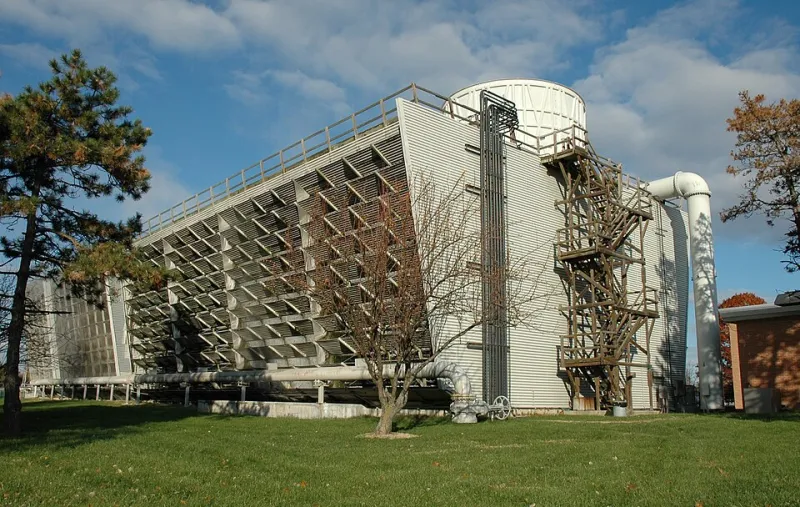
Photo: George Cooke, Public domain, via Wikimedia Commons
Most UK commercial buildings contain two very different cooling problems, and most treat them as one. On one side sits the server room or comms cabinet: a heat-generating space that must be actively cooled all year, even in January. On the other sits the stockroom — pharmaceuticals, chilled food, adhesives, or cosmetics — where the objective is the reverse: keeping goods below a legally defined ceiling, with the risk coming from warm weather rather than equipment load.
The two functions pull against each other. A distribution unit in the Midlands, for instance, might run close-control cooling for its IT rack around the clock while relying on the same ambient conditions — or worse, the same ductwork — to protect a chilled stock area. When one system fails, the other rarely sounds the alarm until the damage is done: a refrigeration unit tripping because the plant room is overheated, or a server rack throttling because a condenser has been cannibalised to serve the chiller.
Why the Two Environments Conflict
The engineering requirements differ in almost every respect. A server room produces a constant, predictable heat load and needs stable temperature and humidity regardless of season. Cold storage, by contrast, is defined by compliance: the Food Standards Agency requires chilled goods to be held at 8°C or below (with a recommended 5°C), while MHRA guidelines govern pharmaceutical warehousing with strict excursion limits. Failure in one case means downtime; failure in the other can mean a destroyed batch, a wasted delivery, or a failed inspection.
The trouble arises where buildings share infrastructure. Exhaust heat from refrigeration plant can raise the temperature of an adjacent plant room housing IT equipment. Conversely, a server room's dedicated cooling unit may be dumping warm air into a corridor that leads straight to the stockroom. Neither problem is visible on a routine service report if the engineer is only looking at one system.
The Combined Audit: Where to Start
A joint audit need not be elaborate, but it should be deliberate. Facilities teams can work through the following:
- Map the heat flows. Trace where each system rejects its heat — condensers, external units, exhaust ducts — and note anything that discharges near another critical space.
- Check alarm independence. Does the server room monitoring alert someone if the stockroom warms, and vice versa? Shared panels create shared blind spots.
- Verify redundancy separately. N+1 on the server cooling means nothing if the chiller serving the cold store has no backup compressor.
- Review monitoring intervals. F-Gas and food safety records should be cross-referenced against IT environment logs to spot correlated failures — a spike in both on the same afternoon usually points to a common cause.
- Assess seasonal exposure. A system sized for a typical British summer will be tested harder each year; the 2022 heatwave caught out many warehouses that had never exceeded 30°C before.
Common Failure Patterns
In practice, three scenarios recur. The first is shared condenser space: rooftop or yard plant crowded together so that hot exhaust from one unit is drawn into the intake of another, degrading both. The second is deferred maintenance on the 'non-critical' system — the stockroom chiller is serviced less often because downtime there seems less costly, until a rejected delivery proves otherwise. The third is unrecorded modification: an IT rack added to a room, or pallets stacked in front of an evaporator, changing airflow without anyone updating the design.
Building a Single Maintenance Calendar
The remedy is organisational rather than technical. Bring the server room and cold store onto one maintenance schedule, with a single accountable owner. Quarterly checks should include verifying airflows, cleaning filters and coils on both systems, and confirming that temperature logging is continuous rather than spot-checked. Annual reviews should revisit capacity: has stock volume grown, has IT load increased, has the building's insulation changed?
For businesses weighing investment, it is worth remembering that the cost asymmetry runs in favour of prevention. A replacement precision cooling unit is a capital line item; a destroyed vaccine consignment or a week of lost e-commerce fulfilment is a reputational one. Auditing both environments together — once a year, with the same discipline applied to either — is the simplest way to ensure that the coldest room in the building and the warmest are never competing for the same resource.