Cool Space, Full Lease: Rethinking the Landlord's Air Con Investment
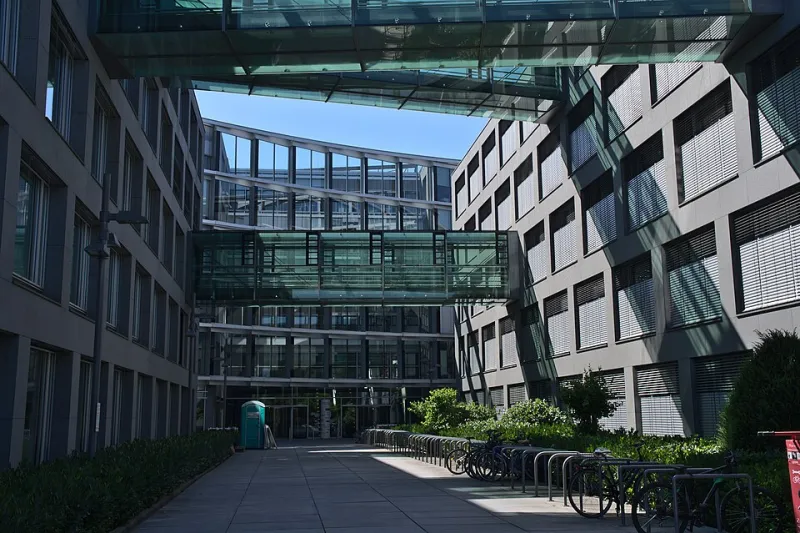
Photo: Robert von Oliva (naruciakk), CC0, via Wikimedia Commons
Every commercial landlord knows the dilemma. A tenant's lease has a couple of years to run. The unit gets warm in summer — properly warm, the kind of warm that sends staff home early and makes viewing parties cut their visit short. A full air conditioning installation might cost thousands, possibly tens of thousands. And the tenant might be gone in eighteen months, leaving the landlord with a capital asset they cannot invoice anyone for.
It is a genuine commercial question, and the instinctive answer — wait until you have to — is, in our view, increasingly the wrong one. Here is why.
The Overheating Unit Is Becoming the Unlettable Unit
The commercial lettings market has shifted quietly but decisively. Prospective tenants now arrive with checklists that would have been unusual a decade ago: EPC ratings, energy costs per square metre, and yes, whether the space has climate control. In office and retail-parade markets, a unit without cooling is starting to behave like a unit without lifts once did — technically lettable, practically disadvantaged.
The physical driver is real. UK summers are delivering longer, hotter spells, and the Met Office has been clear that this trend will continue. A shop with a south-facing glazing and no cooling is not merely uncomfortable; it is trading at a disadvantage against the air-conditioned unit two doors down. Landlords who assume that 'it was fine before' are competing against a market that has moved.
Payback Comes From More Directions Than Rent
The traditional objection to air conditioning investment is that the payback sits entirely in hypothetical rent uplifts. That undercounts the case:
- EPC improvement. Modern systems, particularly heat pump-based units, contribute to better energy ratings. With minimum standards tightening and MEES enforcement strengthening, an EPC uplift can be the difference between a lawful letting and an unlawful one.
- Reduced voids. A comfortable, well-serviced unit lets faster. Every week of void avoided pays a meaningful slice of the installation cost.
- Tenant retention. Occupiers who have invested in fitting out a comfortable space are less likely to move at lease end. Cooling is a reason to stay.
- Service charge credibility. A building with modern, efficient plant supports higher service charge recoveries than one running ageing equipment at the end of its life.
None of these individually justifies the spend. Together, they frequently do.
Splitting the Cost Fairly: The Green Lease Route
The strongest recent development for landlords is the growing use of green lease clauses. These provisions, now common in institutional portfolios and increasingly seen in smaller holdings, allow the cost of efficiency improvements — including cooling and heating upgrades — to be shared between owner and occupier, typically through the service charge or a rent adjustment over an agreed period.
The logic is straightforward. The tenant benefits directly from lower running costs and a better working environment; the landlord benefits from an improved asset. Splitting the capital cost reflects where the value lands. Early conversation with the tenant, ideally well before lease expiry, turns a unilateral gamble into a negotiated investment.
A properly drafted clause should cover the scope of works, the cost split, who procures and maintains the system, and what happens at lease end. Landlords should take legal advice on the drafting — but the commercial principle is now well established in the market.
Do Nothing, and the Bill Arrives Anyway
The counterfactual is not free. A unit left without cooling, or running obsolete plant, eventually faces the same investment decision — but at a moment chosen by the market rather than the landlord: mid-void, mid-negotiation, or when an EPC failure blocks a letting entirely. Emergency decisions cost more than planned ones.
Our advice is simple: if a unit is hot, aging or poorly rated, start the conversation now. Survey the options, model the payback honestly, and talk to the tenant about sharing the cost. The gamble only exists if you leave the decision until the tenant is already halfway out of the door.