Half-Empty Buildings, Full-Capacity Bills: Rethinking Climate Control for the Hybrid Workplace
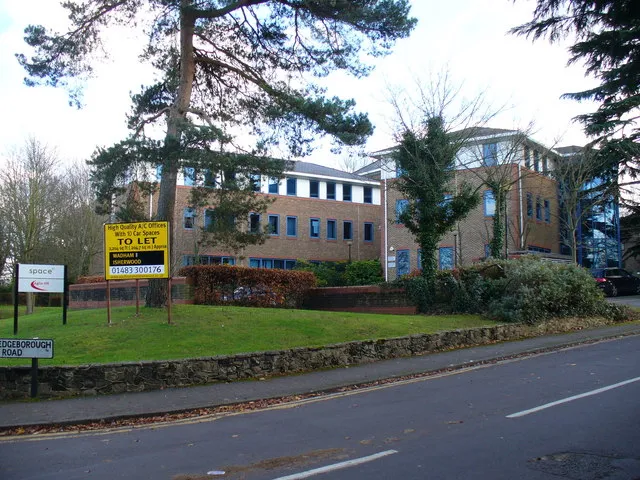
Photo: Colin Smith, CC BY-SA 2.0, via Wikimedia Commons
There is a quiet contradiction unfolding in office buildings across Britain. Tuesday morning in Leeds, and the car park is half full. Wednesday in Croydon, and the fourth floor stands entirely vacant. Yet the air conditioning hums on regardless, conditioning air for empty desks and cooling meeting rooms that nobody has booked. For many facilities managers, the promise that hybrid working would slash overheads has failed to materialise — and the HVAC system is often the reason why.
The Tuesday-to-Thursday Problem
When occupancy was predictable, so was climate control. Systems were commissioned for a building operating at or near capacity, five days a week, and the controls reflected that rhythm. Hybrid working has shattered that rhythm. Most UK offices now see peak attendance between Tuesday and Thursday, with Mondays and Fridays resembling ghost towns.
The trouble is that most commercial HVAC installations were not designed for this stop-start pattern. Pre-occupancy purge cycles run whether fifty people or five hundred arrive. Zoned systems serving whole floors cannot easily distinguish between a fully booked workspace and one occupied by a skeleton team. The result is a building that works as hard as ever while delivering less value per pound spent.
Why Sporadic Occupancy Stresses Equipment
It is tempting to assume that a part-used building simply uses part of the energy. In practice, intermittent operation can be harder on plant than steady running. Repeated start-stop cycles increase wear on compressors and fans. Damp coils and ductwork left idle over long weekends create conditions favourable to mould and bacterial growth — a genuine concern for any organisation mindful of workplace air quality.
There is also a control problem. When different teams occupy different areas on different days, internal heat gains become erratic. A conference suite that hosted thirty people on Wednesday may sit empty on Friday, yet its temperature setpoints rarely change. Meanwhile, the small Tuesday crew huddled in one corner may be fighting over a thermostat that governs an entire wing.
Occupancy Data: The Missing Ingredient
The most effective response begins with information. Occupancy sensors — whether PIR-based, CO2-driven or drawn from desk-booking platforms — give building management systems something they have historically lacked: an accurate picture of where people actually are.
Armed with that data, controls can be reconfigured in meaningful ways:
- Demand-based ventilation, increasing fresh air only where CO2 levels indicate genuine occupancy
- Zone-level setbacks, allowing unused floors to drift to wider temperature bands rather than holding office conditions
- Booking integration, so a reserved meeting room is conditioned for the hour it is needed and released afterwards
- Dynamic scheduling, replacing fixed timers with patterns that mirror actual attendance
None of this requires a full plant replacement. In many cases, meaningful savings come from recommissioning existing equipment against a new operating reality — a process that pays for itself surprisingly quickly.
Servicing on the Building's New Terms
Maintenance schedules deserve the same rethink. A service regime designed for continuous five-day operation may be poorly matched to a building that sits idle half the week. Filters may need less frequent attention in low-occupancy zones but more scrutiny in high-turnover areas. Coil cleanliness, condensate drainage and duct hygiene all behave differently when systems cycle irregularly.
At Air-ATS, we increasingly recommend occupancy-weighted maintenance plans: concentrating inspections on the zones and plant that work hardest, and adjusting intervals as usage patterns evolve. It is a more honest way to spend a maintenance budget.
From Liability to Opportunity
Hybrid working has not made climate control harder in any technical sense — it has made lazy climate control expensive. Businesses that treat the shift as an engineering challenge rather than an accounting anomaly are discovering genuine savings: reduced runtime, longer equipment life, and compliance benefits from lower energy consumption that feed directly into EPC and ESOS reporting.
The empty office is not the problem. Conditioning it as though it were full is. Get the controls, the data and the servicing aligned with how your building is actually used, and hybrid working becomes what it was always meant to be: an efficiency opportunity hiding in plain sight.