Empty Corridors, Full Access: Why the Academic Calendar Should Rule Your HVAC Schedule
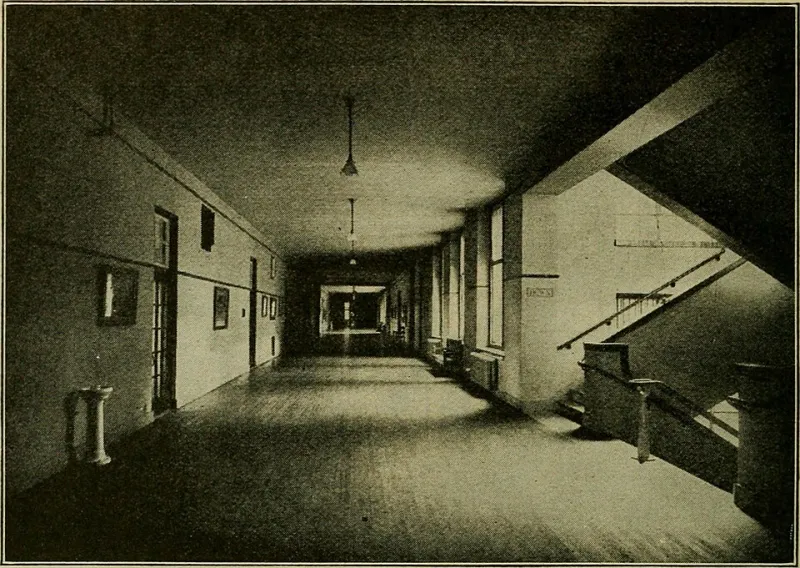
Photo: Internet Archive Book Images, No restrictions, via Wikimedia Commons
The Building That Only Empties Twice a Year
Every school business manager knows the paradox: the buildings that most need significant HVAC work are the ones with the least availability for it. Classrooms, lecture theatres, sports halls and server cupboards full of exam records cannot easily be taken offline while pupils are in the building. Yet across the UK, installation and upgrade works are routinely attempted in inset days, half-term weeks and the odd spare weekend — compressed, expensive and stressful for everyone involved.
The academic calendar is not a soft guideline. It is, or should be, a hard constraint written into every maintenance and installation contract for education estates. Treat it that way, and holiday periods stop being a scramble and start being an asset.
Why Holiday Windows Are Genuinely Different
Working in an empty school is not simply term-time work with fewer interruptions. It changes the entire character of the job.
Plant rooms can be isolated without negotiation. Roof access, scaffold erection and crane lifts — often impossible over a live playground — become straightforward. Carpeted classrooms, IT suites and server rooms can be opened up without dust mitigation regimes designed around thirty children and a lesson plan. Commissioning, balancing and handover can happen properly rather than being squeezed into a Friday afternoon.
There is also a safety dimension. Hot works, refrigerant handling and electrical isolation are all simpler and safer in an unoccupied building. For contractors, that often translates into faster programmes and keener pricing. For estates teams, it means fewer compromises on the specification.
The Procurement Trap
Here is the part that catches even experienced facilities teams: the lead times start long before the holidays do.
A typical sequence for a classroom ventilation upgrade or a heat pump replacement looks something like this:
- Survey and specification: two to four weeks, ideally term-time so the team can see the building in use.
- Procurement — whether via a framework, direct award or competitive quote: four to twelve weeks depending on value thresholds and governance.
- Equipment lead times: chillers, AHUs and certain refrigerant-dependent kit can run eight weeks or longer, particularly ahead of peak season.
- Statutory approvals: structural checks for roof-mounted plant, electrical capacity assessments, and in some cases planning or faculty sign-off for listed or conserved buildings.
Add those up and a summer installation realistically needs decisions made in the autumn or spring term. Schools that begin procurement in June routinely find themselves paying for temporary cooling through September, or accepting a reduced scope that solves half the problem.
Match the Job to the Window
Not every holiday is equal, and the trick is to match works to the right break.
Half-terms — the October, February and May breaks — suit contained jobs: unit replacements like-for-like, controls upgrades, filter and coil deep cleans, minor ductwork modifications. A week is short; anything requiring bespoke fabrication or structural work is a gamble.
The Easter break offers a fortnight, which comfortably accommodates multi-room rollouts and controls replacements across a block.
The summer holiday is the only realistic window for major plant replacement, full ventilation system installation, or works involving multiple buildings. But it is also when every contractor in the sector is fully booked. Availability for July and August is effectively allocated by the previous spring — another argument for early procurement.
The Cost of Getting It Wrong
Squeeze works into term time and three costs appear. First, disruption: noise restrictions, phased access and out-of-hours premiums stretch programmes and inflate labour charges. Second, risk: an incomplete commissioning job in a live classroom is a comfort complaint waiting to happen, and in a heatwave it becomes a genuine welfare issue — several schools have sent pupils home in recent Junes for exactly this reason. Third, emergency rates: a failed boiler or cooling system discovered during the holidays, with no booking in place, puts the school at the back of the queue or at the front of a premium one.
Our Position: Write the Calendar into the Contract
We would go further than advising early planning. We believe the academic calendar should be treated as a hard deadline in every maintenance and installation contract covering education estates — with defined holiday access windows, agreed notice periods, and penalties or escalations if works overrun into term time. Facilities teams should demand it; contractors who work regularly in schools should welcome it, because it lets them plan labour and plant realistically.
Education estates have one structural advantage over almost every other commercial sector: a predictable, published annual rhythm. The schools and colleges that use it well — surveying in term, procuring in spring, installing in summer — get better buildings, calmer Septembers and considerably lower bills. The ones that do not will meet their HVAC problems in September, with a full timetable and no room to manoeuvre.