Run to Failure: The Most Expensive Maintenance Strategy in UK Commercial Property

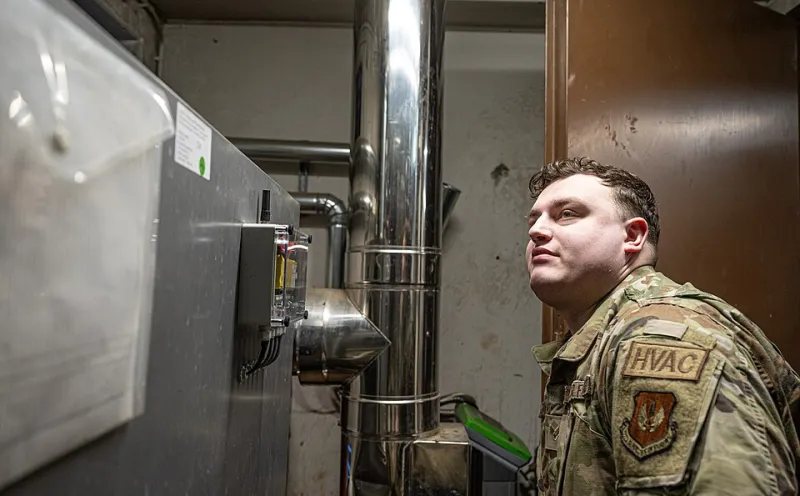
Photo: Chris Thomas-Atkin , CC BY-SA 2.0, via Wikimedia Commons
Somewhere along the way, a myth took hold in British commercial property: that an air conditioning system, like a bottle of claret, somehow improves with age. Nobody says it out loud, of course. But the behaviour tells the story — units limping past their fifteenth summer, refrigerant topped up annually like a prescription, and a facilities budget that only stirs into action when the compressor does not.
The industry has a name for this approach: run to failure. It sounds almost virtuous — getting every last hour from a capital asset. In practice, it is the single most expensive maintenance strategy a UK business can adopt, and summer is the season that sends the invoice.
What a Failure Actually Costs
Ask a contractor for an emergency swap-out quote and the number is rarely the problem. The problem is everything wrapped around it.
A rooftop unit that dies during the first heatwave of the year means an emergency call-out at premium rates, lead times for equipment stretched across every other building in the same position, scaffold or crane hire booked at short notice, and — for hospitality, retail, or any client-facing premises — trading days that quietly bleed revenue. A school or office running partially closed in July carries its own costs, some of which never appear on a purchase order: lost bookings, staff comfort complaints, an H&S conversation nobody wanted.
Compare that with a planned replacement: equipment specified months ahead, installed during a shoulder season, phased across a building so no single day of operation is lost. The kit itself often costs no more. It is the chaos around it that you pay for.
The Fine Wine Fallacy
Why does the myth persist? Partly because HVAC ageing is invisible. A ten-year-old unit looks identical to a new one from the ground. Performance decay is gradual — a percentage point of efficiency here, a longer pull-down time there — so there is no obvious moment when the asset becomes a liability.
But the physics does not negotiate. Compressors wear, heat exchangers foul, controls drift, and refrigerant leaks become chronic rather than exceptional. An ageing system running on an obsolete refrigerant carries a further liability: F-Gas phase-down means certain gases are becoming scarcer and costlier, so a leak in a legacy unit is no longer a top-up — it is a financial event. Meanwhile, energy consumption creeps upward, and the difference lands on the electricity bill every quarter, unremarked.
A Framework for the True End-of-Life Date
Rather than waiting for the compressor to make the decision for you, we recommend a simple annual exercise. Score your system against five questions:
- Age versus design life. Most commercial units are engineered for 12–15 years of service. Beyond that, you are operating in borrowed time.
- Repair trajectory. Total repair spend over the last 24 months, divided by replacement cost. Above roughly 30%, the economics have tipped.
- Refrigerant status. Is the gas still readily available and compliant, or are you paying a premium for a phase-down casualty?
- Efficiency drift. Compare current kWh consumption against commissioning data. A 15–20% rise with no change in load is a system telling you something.
- Downtime tolerance. What would a week without cooling actually cost your operation? The higher that number, the stronger the case for replacement on your schedule rather than the equipment's.
Three or more red flags means the end-of-life date has arrived, whether or not the unit has admitted it.
Phased Beats Panicked
The good news is that replacement need not be a cliff-edge decision. Multi-unit buildings can be upgraded in stages, prioritising the areas with the greatest comfort or compliance risk. Budgeting for replacement two or three years out lets you align works with school holidays, lease events, or quieter trading months — and avoids the scramble that follows a July breakdown.
The compressor is not a bottle of wine. It does not mellow with age; it quietly accumulates risk. The businesses that plan the school run — scheduled, sequenced, on their terms — spend less, lose less sleep, and never learn what their building sounds like at 4am on a August bank holiday.
If your system is past its tenth summer and you cannot answer question five with confidence, it may be time to start the clock deliberately, rather than waiting for it to start itself.